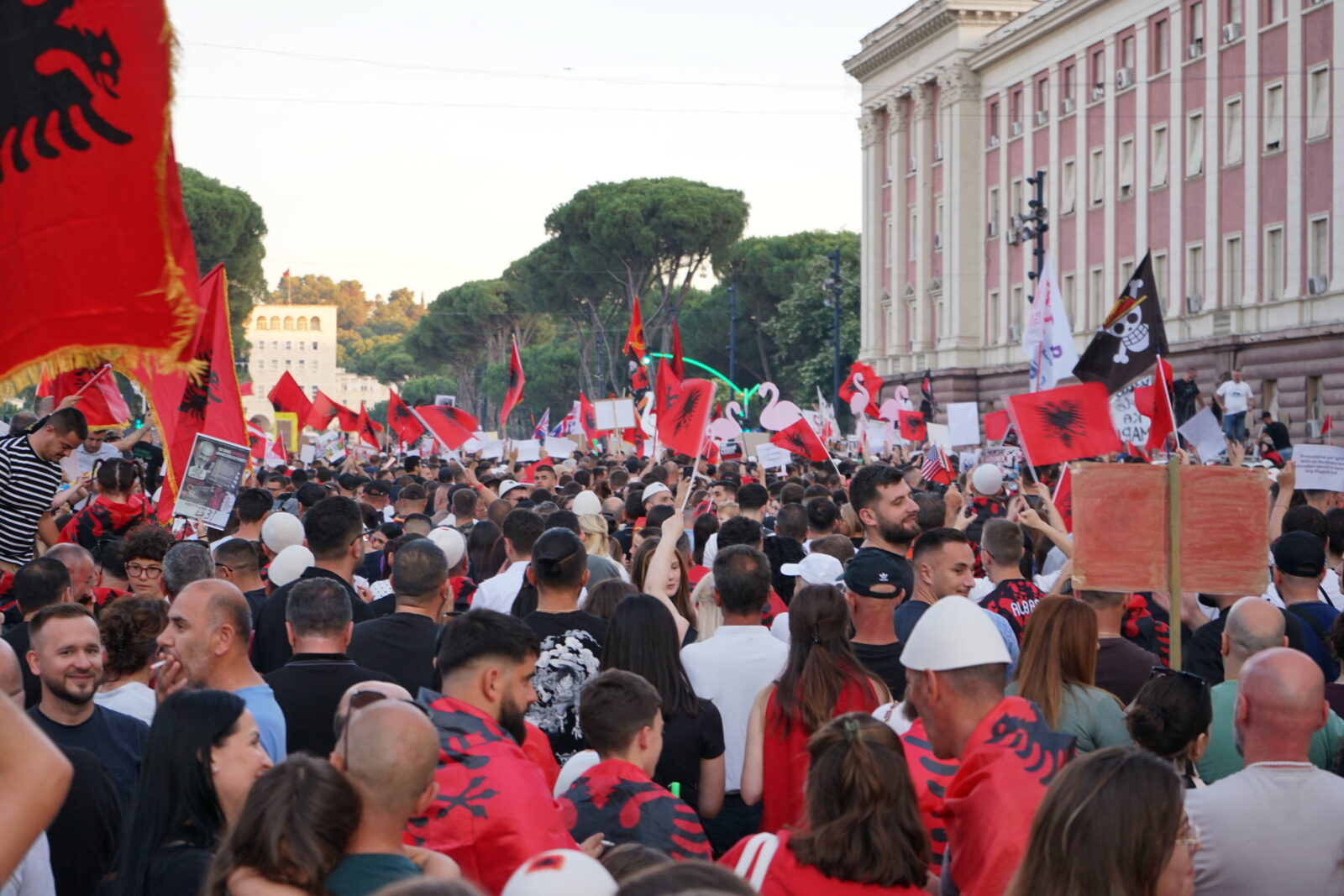
Albanians have been protesting for more than five months. Reducing the current Albanian crisis, however, to a debate about the merits of capitalism versus socialism is, at best, naive and, at worst, a self-serving exercise. Albania has never had the opportunity to test these models under the conditions of a Western democracy with functioning institutions. That is a luxury we have yet to enjoy.
As I see it, Albanians have not taken to the streets to protest against a particular economic or political model. They are protesting against the greed and dishonesty of politicians. They are protesting against the rampant theft of public funds, the nauseating enrichment of a small ruling elite, and the extreme misery endured by the majority. They are protesting against the lack of accountability and the slide towards authoritarianism, against the absence of hope and the exodus that, for many, seems unavoidable.
Therefore, when we talk about what should replace the Albanian political system after this turmoil, which will sooner or later come to an end, my aspirations are tied neither to the political left nor to the right. This does not mean that economic policies are unimportant. But for now, the issue is not whether taxes should be raised or lowered, whether public services should be privatised or nationalised, or whether investment should be left entirely to the market or partly controlled by the state. After all, countries such as the United Kingdom, Canada, Germany and France have mixed economies, systems that combine market forces and state intervention to varying degrees. None of those models, whether implemented on its own or in combination with others, guarantees that politicians will act honestly. In every case, effective accountability institutions are needed to curb corruption, exploitation and the abuse of power.
That is why my greatest aspiration at this moment is for us finally to have a political class that sees its role, first and foremost, as a form of public service and an act of patriotism. One that regards public office as a shared privilege rather than a personal entitlement, accepts the modest salary that comes with the job, and embraces a non-extravagant lifestyle. One that renounces expensive watches and wines, endless property holdings, the luxury of international resorts, and the education of their children at the world’s most elite schools when these privileges are financed through the abuse of power, at the expense of hospitals, schools, infrastructure and, more broadly, the well-being of the Albanian people.
I do not know what kind of people will make up this political class. I do not believe there is any particular profession that necessarily prepares someone to govern well. But I do believe that having experienced real responsibility, knowing that your actions can cost a patient their health or life, a client their job or liberty, or someone their entire life’s savings, is a valuable education for anyone aspiring to govern. Doctors, lawyers, economists and people in many other professions understand the theory well, but they have often also experienced first-hand the human cost of decision-making. We undoubtedly need theorists and thinkers, too. But governing requires more than ideas: it requires experience, responsibility, integrity and the ability to be held accountable by others.
Finally, I do not believe the diaspora is the answer, although it can make a valuable contribution, including through technical expertise. In my view, the future leaders are Albanians who have chosen to remain in Albania and confront the ugly realities of everyday life; those who protested patiently in the scorching summer heat and who now face tear gas, rubber batons and violence. Those who want change not simply to take the place of those governing today, but to give self-government an entirely different meaning.